Leave Your Message

China Top Full Lash Extension Suppliers?

Choosing a Full Lash Extension supplier is not simply a price comparison. Salons need consistent curl, length, fiber quality, and dependable delivery. One uneven tray can disrupt a full appointment book. Small details matter.

Industry reports offer useful context, but their market definitions differ. Grand View Research tracks the eyelash-extension market, while broader beauty reports may group extensions with false lashes and other products. Buyers should check what each report actually measures before relying on a market-size figure. The distinction is easy to miss.

A trustworthy supplier shortlist should connect claims to evidence. Request current product specifications, sample trays, batch details, and clear answers about material sourcing. Compare curl retention and band consistency under the same lighting. Then check whether reorders match the original sample. One test is not enough.

A named expert quote needs a verifiable source. No interview, article, or quotation source was provided here, so attributing a statement to a lash professional would risk inventing evidence. That would weaken the guide, not strengthen it. This introduction therefore avoids a fabricated quotation. The supplier comparisons that follow should prioritize documented product quality, responsive service, and transparent terms—while treating promotional claims with care.
China Top Full Lash Extension Suppliers?

What Are Full Lash Extensions and How Are They Used?

What Are Full Lash Extensions and How Are They Used?

Full lash extensions are applied across most of the natural lash line to create a more continuous, defined look. They are individual fibers attached to natural lashes, not a strip placed on the eyelid. The final effect depends on fiber length, curl, thickness, and how densely the extensions are arranged. A softer set may keep a natural appearance; a fuller design can look more dramatic. “Full” does not mean every natural lash should carry an extension. Lash growth cycles vary, and some hairs are too short or delicate to support added weight.

Application requires careful isolation. A trained lash technician separates one natural lash, places an extension with suitable weight, and checks that neighboring lashes remain free. The client keeps their eyes closed while the adhesive cures. No rushing here. Clean tools, a comfortable position, and clear aftercare instructions matter. For example, rubbing the eyes or pulling at extensions can damage natural lashes. Results also vary with eye shape, lash condition, and daily habits. A dense look may sound appealing, but it is not always the healthiest or most comfortable choice. Ask for a design that suits the natural lash line, and speak up if you feel stinging, heaviness, or persistent irritation.

Key Criteria for Evaluating Chinese Lash Extension Suppliers

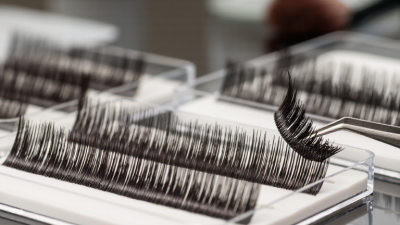
When evaluating Chinese lash extension suppliers, look beyond catalogue photos. Ask for fiber specifications, curl consistency, tray dimensions, adhesive compatibility, and batch-level inspection records. A fan that looks even in a product image may separate under tweezers. Request samples from more than one production batch, then compare them under the same lighting and application conditions. Small differences matter.

Market growth raises the stakes. Grand View Research estimated the global eyelash extension market at about US$1.1 billion in 2023 and projected a 6.2% compound annual growth rate through 2030. That forecast is not a supplier-quality guarantee. Treat it as context, not proof. Check whether a supplier can document material composition, trace production lots, and explain how defects are handled. Ask for test methods and actual records, not just certificates with no supporting details. Verify that samples match quoted specifications.

Communication is part of quality control. Send a clear technical sheet with acceptable curl, length, thickness, packaging, and labeling requirements. Compare the response time and whether answers remain consistent across sales and production contacts. A modest pilot order can reveal packing errors, inconsistent trays, or slow corrective action. I once assumed a polished sample represented routine output; it did not. Ask what changes between sample and mass production, and get the answer in writing.

Leading Types of Full Lash Extension Suppliers in China

China’s full lash extension suppliers generally fall into three groups: manufacturers, OEM/ODM providers, and wholesalers or trading companies. Manufacturers make lash trays, fans, and related tools in their own facilities. They may offer better control over materials and production details, but minimum order quantities can be higher. Ask for product specifications and sample sets before discussing a large order.

OEM/ODM suppliers can adjust packaging, curl, length, and fiber options to suit a buyer’s brief. Their capabilities vary, so confirm which steps they handle directly and which they outsource. Wholesalers often keep popular styles in stock and support smaller orders. They can be convenient, though product consistency may depend on the factory they source from. Details matter.

Tips: Request samples from the same production range you plan to buy. Compare tray labeling, fiber feel, curl shape, and fan symmetry under consistent lighting. Ask how defects are recorded and handled. A supplier’s quick reply is useful, but it is not proof of quality. I’d still check the samples carefully; sometimes the tray looks neat, while individual fans differ more than expected.

China Top Full Lash Extension Suppliers? – Leading Types of Full Lash Extension Suppliers in China
Supplier Type Typical Products Customization Options Order Scale Potential Advantages Points to Verify
Specialized lash manufacturers Individual extensions, premade fans, lash trays, and related application tools Usually offer choices in curl, length, thickness, fiber, tray layout, and packaging; options depend on production capability Often suited to repeat wholesale orders; minimum quantities vary by product and factory Direct access to production information and product specifications Request current samples, specification sheets, quality-control details, and confirmation of the production site
OEM and ODM suppliers Private-label lash trays, kits, accessories, and packaging programs OEM services may use buyer-provided specifications; ODM services may adapt existing designs or product ranges Varies; custom packaging or product development may require higher quantities than standard stock Can support coordinated branding, packaging, and product specifications Confirm ownership and approval of artwork, sample charges, lead times, and who manufactures each item
Wholesale distributors and trading suppliers Ready-made lash products from one or more production sources, sometimes with tools and accessories Typically focused on available catalog choices; custom options depend on their upstream suppliers May offer mixed-product purchasing or smaller trial orders; terms vary Can simplify sourcing across several product categories Check stock status, product consistency, traceability, and whether the supplier is a manufacturer or intermediary
Lash-material and component suppliers Synthetic lash fibers, trays, strips, adhesive-related packaging, and other production components Specifications may include material, dimensions, color, or component format, depending on the item Often business-to-business orders; minimums depend on material and production process Useful for buyers assembling products or sourcing components separately Verify material specifications, intended use, applicable documentation, and compatibility with the finished product
Purchasing note: Product availability, minimum order quantities, customization, lead times, and export documentation vary by supplier and order. Confirm current terms and evaluate samples before placing a bulk order.

How to Verify Product Quality, Safety, and Certifications

When evaluating China-based full lash extension suppliers, request batch-specific test reports, not a polished certificate with no product link. Check fiber composition, curl and length tolerances, adhesive compatibility, and packaging traceability. Ask for samples from the same production lot, then inspect the lash bands under magnification and compare measured lengths with the specification sheet. Small differences matter. A tidy sample may not represent the next shipment; I have seen that gap overlooked.

Safety documents deserve the same scrutiny. Request the safety data sheet for any adhesive, plus ingredient and allergen information where applicable. Verify that the issuing laboratory is identifiable and that test methods, dates, and product names match the goods being offered. ISO 22716 provides guidance for good manufacturing practices in cosmetics, but a supplier’s claim of compliance is not proof of certification or product performance. Confirm the certificate’s scope and validity with its issuer.

Use external data as context, not as a substitute for testing. The European Commission’s 2023 Safety Gate report recorded 3,412 alerts for dangerous non-food products; cosmetics accounted for 36% of notifications. The report is not specific to lash extensions, yet it shows why documented checks matter. Keep retained samples, inspection photos, and lot records. Some checks feel repetitive. They are still worth doing.

How to Compare Prices, Services, and Export Capabilities

China Top Full Lash Extension Suppliers? How to Compare Prices, Services, and Export Capabilities

Comparing full lash extension suppliers takes more than checking the quoted price. Ask for a sample set and inspect the curl, band flexibility, fiber consistency, and packaging. A low unit price may exclude custom packaging or freight. Request an itemized quotation that separates product costs, setup charges, and shipping estimates.

Service matters after the sample arrives. Check how quickly the supplier answers technical questions, confirms specifications, and handles a batch with inconsistent lengths. Ask whether product details and inspection records can be shared before shipment. Small details count. A clear response is useful evidence, though it cannot guarantee every order will match perfectly.

Export capability should be verified with practical questions. Which shipping methods are available? Can the supplier provide accurate cartons, packing lists, and shipment updates? Confirm production lead times and how delays are communicated. Compare the same specifications across quotations, including lash count, material, and packaging. I have seen comparisons go wrong when buyers focused on price and overlooked different box quantities. Even careful checks leave some uncertainty, so start with a manageable order and review the delivered goods before scaling up.