Leave Your Message
Buying an Eyelash Set for international distribution involves more than comparing photos and prices. A professional buyer studies curl, length, thickness, band flexibility, fiber material, and adhesive compatibility. Small differences can affect comfort, application speed, and repeat orders. A soft, lightweight lash may suit daily wear, while a fuller style may serve salon clients or special occasions.
This guide presents ten practical buying tips for global buyers. It focuses on sample evaluation, supplier communication, packaging, quality control, and reliable documentation. Request clear specifications, recent product photos, and batch samples before confirming a large order. Check whether the supplier can explain material sources, production controls, and recommended storage conditions. Labels should be accurate and suitable for the destination market. Local cosmetic, labeling, and import requirements may differ, so professional regulatory advice is sensible.
Look closely.
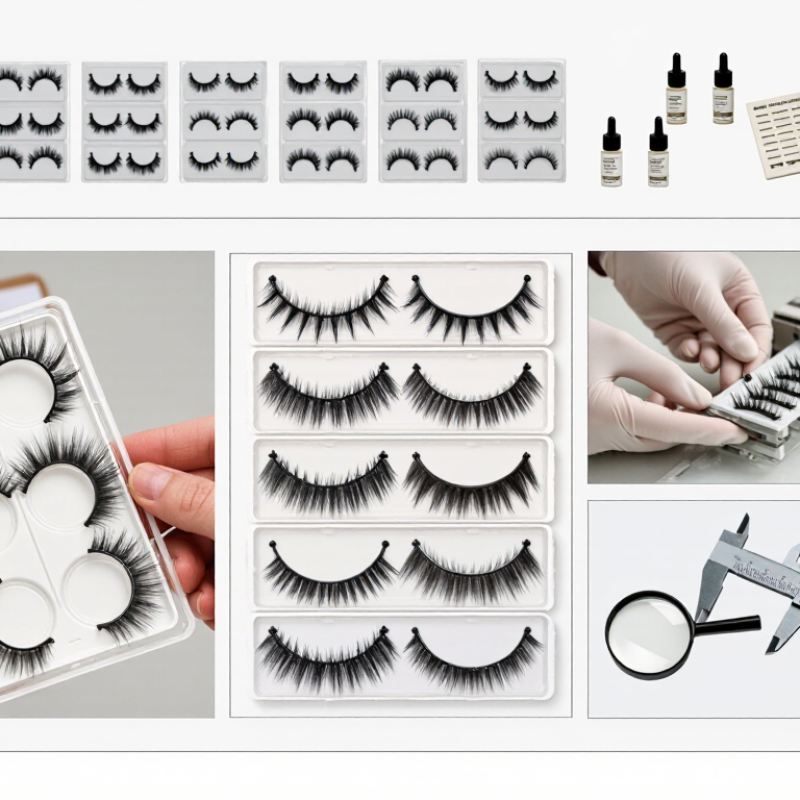
A good sample can still hide production variation. Compare several units from the same batch, not just one attractive piece. Measure the band, inspect the lash knots, and test the tray after normal handling. Pricing also deserves careful reflection. The cheapest option may create higher costs through damaged packaging, inconsistent curls, or customer complaints. However, a higher price does not automatically prove better quality. Reliable decisions need evidence. Supplier records, independent testing where appropriate, and transparent communication provide stronger confidence than marketing claims. Even experienced buyers can overlook storage humidity or shipping pressure. That is why this Eyelash Set buying process should remain practical, documented, and open to revision.
Global demand for eyelash sets is not measured by style alone. Buyers should map each market by product type, adhesive ingredients, labeling needs, and sales channel. A carton of reusable lashes and a bottle of lash adhesive may face different regulatory treatment. Confirm classification for every component before ordering.
In the United States, FDA cosmetics guidance helps buyers review ingredient declarations, safety responsibilities, and labeling. Most cosmetics do not receive FDA premarket approval; color additives are a key exception. Do not treat a supplier’s “FDA approved” claim as proof. Ask for a complete ingredient list, batch traceability, and substantiation for safety claims. A tidy carton proves little.
For the EU, Regulation 1223/2009 sets requirements for cosmetic products, including a responsible person, safety assessment, product information file, and CPNP notification before market placement. Adhesive intended for cosmetic use may fall within these requirements, while lash strips can require a separate classification check. Verify applicable language and labeling rules for each destination country. Demand patterns can then be compared against compliance costs, preferred wear styles, and retailer requirements. Small gaps remain easy to miss, especially when a set combines several components.
| No. | Buying Dimension | What to Check in the Eyelash Set | U.S. FDA / MoCRA Consideration | EU Regulation 1223/2009 Consideration | Global Demand Signal and Buyer Action |
|---|---|---|---|---|---|
| 1 | Select the lash format | Compare strip lashes, clusters, individual extensions, magnetic lashes and reusable sets. Record lash length, curl, band type, fiber material and intended number of uses. | False eyelashes and related products may fall within cosmetic oversight depending on their intended use and claims. Avoid presenting a cosmetic product as FDA-approved; FDA generally does not pre-approve cosmetics. | If the product or adhesive is a cosmetic product, assess the obligations of Regulation (EC) No 1223/2009, including safety, responsible person, product information and notification requirements. | Natural-looking, lightweight and reusable formats support broad demand. Request a specification sheet and sample set before selecting a regional assortment. |
| 2 | Verify adhesive composition | Check whether the set includes adhesive, liner or remover. Obtain the complete ingredient list, safety data where applicable, curing time, storage conditions and skin-contact instructions. | Cosmetic ingredients generally do not require FDA premarket approval, except for color additives and specific restricted categories. The seller remains responsible for product safety and lawful labeling. | The finished cosmetic product must be safe under reasonably foreseeable use. Ingredient restrictions and prohibitions in the relevant annexes must be reviewed before placing the product on the EU market. | Adhesive-free sets reduce regulatory and irritation complexity. For adhesive-included sets, make the adhesive a separate compliance workstream rather than treating it as ordinary packaging. |
| 3 | Control eye-area safety | Review irritation, sensitization, particle shedding, sharp edges, band flexibility and removal performance. Include clear warnings against use on irritated or infected eyes. | A cosmetic product must be safe when used as directed. Maintain substantiation for safety decisions and investigate complaints involving eye irritation, allergic reactions or injury. | The EU safety report must evaluate the intended site of application, exposure, toxicological profile and foreseeable use. Eye-area exposure should be specifically addressed by the safety assessor. | Eye comfort is a major conversion factor across mature and emerging markets. Ask for safety test summaries, complaint procedures and batch traceability before volume orders. |
| 4 | Check labeling completeness | Confirm product identity, quantity, material information, directions, warnings, storage instructions, lot or batch code and contact details for the responsible seller or importer. | Cosmetic labels must not be false or misleading and should include required declarations such as ingredient labeling and net quantity where applicable. U.S. requirements may differ from EU labeling conventions. | Article 19 generally requires items such as the responsible person's name and address, nominal content, durability or period-after-opening information where applicable, precautions, batch number, function and ingredient list. | Prepare region-specific artwork instead of using one universal label. Translate mandatory information for each EU Member State where the product is sold. |
| 5 | Separate cosmetic and medical claims | Avoid claims such as “treats blepharitis,” “prevents infection,” “repairs eye disease” or “clinically cures irritation.” Use appearance-based claims only when they can be supported. | Intended use and promotional claims can affect regulatory classification. Drug-like claims may move a product outside ordinary cosmetic treatment and create additional requirements. | Cosmetic claims must be truthful, supported and consistent with the common criteria for cosmetic claims. Avoid medical or therapeutic positioning unless the applicable legal framework has been assessed. | “Natural look,” “lightweight feel” and “reusable design” are lower-risk commercial themes when substantiated. Align product pages, packaging and influencer content. |
| 6 | Request technical documentation | Collect material specifications, colorant details, adhesive formula information, packaging specifications, test reports, batch records and instructions for use. | Under MoCRA, applicable cosmetic facilities and responsible persons may have facility registration, product listing, safety substantiation and adverse-event obligations, subject to statutory requirements and exemptions. | The EU product information file should include the cosmetic product safety report, product description, manufacturing information, evidence supporting claims and other required data. It must be available to authorities. | Use a compliance document checklist at quotation stage. Missing documents are a commercial risk even when the physical samples appear acceptable. |
| 7 | Evaluate manufacturing controls | Audit cleanliness, fiber handling, adhesive filling, foreign-particle control, line clearance, finished-product inspection and batch identification. | U.S. cosmetic manufacturers and processors should maintain controls that support product safety and compliance. MoCRA includes good manufacturing practice rulemaking requirements for applicable cosmetics. | Manufacturing should follow applicable good manufacturing practice expectations; EN ISO 22716 is widely used as a supporting GMP reference for cosmetic products. | Factories with documented change control and traceability are better suited to cross-border demand. Include inspection rights and corrective-action timelines in the purchase agreement. |
| 8 | Plan post-market surveillance | Define procedures for customer complaints, adverse reactions, product returns, lot investigation, corrective action and recall communication. | Serious adverse events associated with cosmetics may trigger reporting duties under MoCRA. Keep complaint records and escalation procedures proportionate to the product risk. | The responsible person must manage serious undesirable effects and cooperate with competent authorities. Product safety and traceability records should support rapid investigation. | Markets with strong e-commerce exposure need fast digital complaint monitoring. Track issues by SKU, shade, adhesive lot and sales country. |
| 9 | Adapt packaging and sustainability | Measure packaging weight, plastic components, tray material, recyclability information, refill potential and protection against deformation during transport. | Packaging and environmental claims must not mislead consumers. Confirm that recycling statements are accurate for the destination market and packaging format. | EU Member States may apply additional packaging and waste obligations. Environmental claims should be specific, evidence-based and consistent with applicable consumer-protection rules. | Compact, protective and lower-material packaging supports online fulfillment and sustainability expectations. Test compression and humidity resistance before shipment. |
| 10 | Build a regional launch matrix | Map lash style, price tier, language, adhesive inclusion, labeling version, documentation status, shipping restrictions and expected reorder cycle by destination. | For the United States, confirm whether the responsible party and facility fall within applicable MoCRA registration and listing requirements, while also checking state-level obligations. | For the EU, identify the responsible person, complete the safety assessment and product information file, and complete required notification before placing the cosmetic product on the market. | Use a staged rollout: sample validation, compliance review, limited launch, complaint monitoring and replenishment. This reduces inventory risk while revealing demand by region. |
Reference framework: U.S. FDA cosmetic guidance and the Modernization of Cosmetics Regulation Act of 2022 (MoCRA); Regulation (EC) No 1223/2009 on cosmetic products, including safety assessment, product information, responsible person, labeling, good manufacturing practice and notification requirements. Regulatory classification depends on product composition, intended use and marketing claims.