Leave Your Message

How to Choose the Best Volume Set Lashes for Your Business?

Choosing the right Volume Set Lashes can shape your salon’s results, reputation, and repeat bookings. Grand View Research’s False Eyelashes Market Size, Share & Trends Analysis Report, 2024–2030, estimated the global market at approximately USD 1.6 billion in 2023. It also projects steady growth through 2030. The Business Research Company’s False Lashes Global Market Report 2024 reports similar expansion across professional and retail beauty channels. These figures show opportunity, but market growth alone cannot select the right tray.

A practical decision starts with your clients. Examine their natural lash strength, eye shape, lifestyle, and preferred finish. A soft 2D set may suit a first-time client, while a fuller volume style may satisfy customers seeking stronger definition. Diameter, curl, length, taper, and weight must work together. Fit still matters. Circana’s 2024 beauty industry reporting also indicates continued consumer interest in premium beauty experiences, although demand differs by market and price level. Use that information carefully. Local booking data may be more valuable than a global forecast.

Experienced lash artists should compare fan symmetry, fiber consistency, pickup speed, retention, and supplier documentation. Ask whether the product supports efficient work without compromising comfort or natural lash health. Adhesive compatibility and storage conditions matter, too. No report can replace a controlled trial. Test several Volume Set Lashes with trained technicians, record application time, client feedback, refill intervals, and product waste. A perfect formula does not exist. Your best choice may need revision as seasons, clients, and business priorities change.

How to Choose the Best Volume Set Lashes for Your Business?

Define Volume Lash Specifications: 0.03–0.07 mm Diameters and 2D–6D Fans

Choosing the best volume set begins with diameter, not packaging. A 0.03 mm fiber suits delicate clients and supports fuller 5D–6D fans. A 0.05 mm fiber offers balanced density for everyday volume. For stronger natural lashes, 0.06–0.07 mm fibers may work better in lighter 2D–4D fans. The numbers matter. Six 0.05 mm fibers have roughly 10% of the cross-sectional area of one 0.15 mm classic fiber. Still, adhesive, length, and fan spread change the final load. Test the finished fan on a training strip first.

Allied Market Research estimated the global eyelash extension market at about USD 1.36 billion in 2022, with continued growth projected through 2032. That demand does not remove the need for careful selection. In practical salon work, 2D fans create a soft enhancement, while 3D–4D fans add visible texture without looking overly dense. Five-dimensional and six-dimensional fans need lighter diameters and controlled widths. A wide 6D fan can look beautiful under bright lighting, yet appear heavy on shorter natural lashes. It is easy to overestimate comfort. Record fan width, diameter, curl, and client feedback after each appointment. My own testing would not rely on a supplier chart alone; humidity, technique, and natural lash strength can change the result. A specification sheet is a starting point, not proof.
Match Curls, Lengths, and Trays to Client Eye Shapes and Service Demand

Choosing a volume lash set starts with eye shape, not the fullest tray. A 2024 Grand View Research report valued the global false eyelashes market at about USD 1.6 billion and projects continued growth through 2030. That growth increases client choice, but poor mapping still causes disappointment.

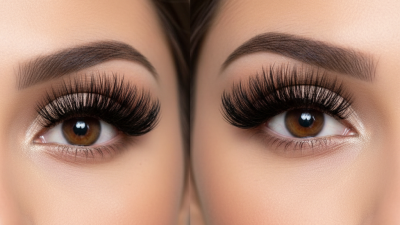
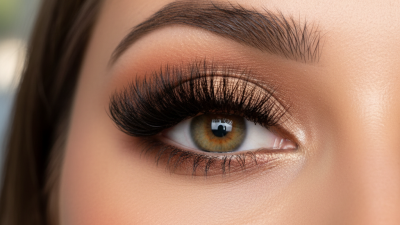
For almond eyes, C or CC curls usually create balanced lift. Hooded eyes often need L or L+ curls, especially near the outer third. Round eyes can appear softer with moderate C curls and shorter outer lengths. Downturned eyes need careful outer-corner control; excessive length there may pull the gaze downward. Keep 8–15 mm trays available, but use longer fibers only where the natural lash safely supports them. Safety comes first.

Service demand should shape your inventory. Allied Market Research projects strong expansion in the false-eyelash category through 2032, suggesting more clients may request customized volume looks. Track bookings by curl, length, and refill timing each month. Keep deeper stock of your top three combinations. Store specialty curls in smaller quantities. Demand leaves clues.

I sometimes overbuy dramatic D curls because they look impressive in photographs. They move slower in everyday appointments. A better system is testing one new tray per month, then reviewing usage, retention feedback, and client comfort. Data helps, but consultation remains essential. Trends do not replace judgment.

Evaluate Lash Quality Through 0.05–0.15 mm Tapered Tips and Uniformity

Choosing the best volume set lashes starts with examining the tapered tip, not just the package appearance. Diameters from 0.05 to 0.07 mm usually create soft, lightweight fans. Sizes from 0.10 to 0.15 mm can offer stronger visual definition. However, the correct choice depends on the client’s natural lash strength and the intended styling effect.

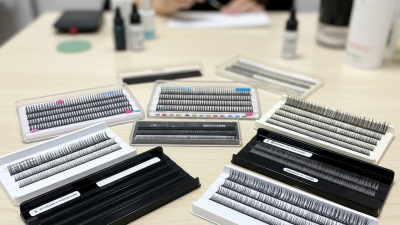
During quality checks, place several lashes on a clean white surface. Their tips should narrow smoothly and consistently. Uneven tapering can make handmade fans collapse or look bulky. Check the full tray under magnification. Look for matching lengths, stable curls, and a consistent matte finish. In my experience, small differences become obvious during busy appointments. I once trusted attractive packaging too quickly. That was a poor decision.

Tips: Test a few fibers before purchasing larger quantities. Create several fans and compare their bases. They should open evenly without excessive pressure. Record the diameter, curl, and fan behavior for future orders. If 0.15 mm feels too rigid, reduce the weight rather than forcing a fuller look. A trained lash professional should assess natural lash tolerance carefully. Consistency matters more than dramatic thickness.

How to Choose the Best Volume Set Lashes for Your Business? - Evaluate Lash Quality Through 0.05–0.15 mm Tapered Tips and Uniformity
Nominal Fiber Diameter Typical Professional Use Common Fan Range Desired Tapered-Tip Characteristics Recommended Uniformity Benchmark Business Evaluation Priority
0.05 mm Light and mega-volume styling for clients with suitable natural lashes. 8–12 fibers per fan, depending on lash length and natural-lash strength. Very fine, centered tips with a smooth transition from the narrow tip to the base. Tips should separate cleanly without visible splitting. At least 95% of sampled fibers should remain within ±0.01 mm of the stated diameter. Check softness, fan stability, and whether the narrow tips close or twist during pickup.
0.06 mm Light volume and textured volume sets where a soft appearance is required. 6–10 fibers per fan for a balanced volume effect. Tips should be sharply defined but not brittle. The taper should be even on both sides, with no blunt or flattened ends. A consistent matte finish and a diameter spread no greater than ±0.01 mm across the inspection sample. Evaluate how easily the fibers fan and whether the tips maintain separation after placement.
0.07 mm Standard volume sets and lightweight handmade fans. 5–8 fibers per fan for most volume applications. Uniformly tapered tips should form a clean, narrow fan edge without irregular lengths or hooked ends. At least 95% visual consistency in diameter, curl, length, and tip shape within the same tray. Prioritize reliable fan formation, consistent curl, and a stable adhesive bond at the base.
0.10 mm Light hybrid sets, narrow volume fans, and clients requiring a more defined effect. 3–5 fibers per fan; the final selection must suit the natural lash. Tapered ends should soften the appearance of the thicker base. Blunt tips may create a heavier, less refined finish. Diameter, curl, and length should remain consistent throughout the tray, with no visibly oversized fibers. Confirm that the fiber does not look heavy and that the base remains narrow enough for clean isolation.
0.12 mm Very light hybrid styling or a defined look on strong natural lashes. 2–4 fibers per fan, subject to professional weight assessment. Tips should have a visible but smooth taper and should not show rough cuts, fraying, or uneven narrowing. Use sampling checks to confirm consistent diameter and curl; reject trays with frequent thick or misshapen fibers. Assess weight, flexibility, and the transition between the base and tapered tip before selecting for volume work.
0.15 mm Primarily classic or limited hybrid use; generally not preferred for dense volume fans. Usually 1–2 fibers per natural lash, depending on the client’s lash condition. A smooth tapered tip can reduce visual heaviness, but it does not make the fiber equivalent to a lightweight volume fiber. Reject fibers with blunt, split, or visibly inconsistent tips because defects are more noticeable at this diameter. Use only after checking natural-lash strength, total extension weight, and the desired finish.
Quality note: Fan counts are practical starting ranges rather than universal rules. Final selection should consider natural-lash diameter, extension length, curl, fan width, adhesive performance, and the client’s desired look. For incoming quality control, inspect fibers from multiple areas of each tray and record diameter, curl, length, tip shape, and visible defects separately.
Measurement reference: Diameter tolerance should be verified with calibrated measuring equipment where possible. Visual inspection alone can identify blunt tips, uneven tapering, fraying, inconsistent curl, and length variation, but it cannot replace dimensional measurement.

Compare Cost per Set, Tray Yield, and Target Gross Margin Before Buying

How to Choose the Best Volume Set Lashes for Your Business?

The lowest purchase price does not always create the best margin. Compare the complete cost per set, including lash fibers, adhesive, eye pads, and technician time. A tray may appear economical, yet uneven curls or damaged fibers can reduce usable yield. Count the fans your team can actually create, not only the number printed on the package.

Calculate cost per set

by dividing the tray cost by its usable set yield. For example, a 20-dollar tray producing 25 complete sets costs 0.80 dollars per set. Then add other direct costs and labor. Compare this figure with your service price and target gross margin. Gross margin equals selling price minus direct cost, divided by selling price. Many businesses aim for a clear margin target, but local pricing and labor rates can change the result.

Tips: Test one tray before ordering heavily. Record fan speed, fallout, and leftover lengths. My first spreadsheet looked accurate, but it ignored wasted fibers and correction time. That mistake changed the real margin. Review results after several appointments, because one fast technician may produce a different tray yield than a newer team member. Keep notes with actual set counts, not assumptions. Small differences matter.

Select Suppliers Using MOQ, Lead Times, Certifications, and Sample Testing

Choosing the best volume set lashes starts with supplier evidence, not attractive photos. Grand View Research estimates the global false eyelashes market reached about USD 1.6 billion in 2023, with continued growth through 2030. That growth increases supplier pressure, so verify capacity carefully.

MOQ should match your realistic sell-through. A low price means little if half the stock remains unsold. Ask for production and shipping lead times separately. Include sample approval, packaging, inspection, and freight. In my sourcing reviews, suppliers often quote only factory time. That creates avoidable delays. Request certifications such as ISO 9001 or ISO 22716 where relevant. Check the certificate holder, factory address, validity, and certification scope. A document alone proves very little.

Tips: Order samples from at least two production batches. Test curl retention, fiber shedding, band flexibility, tray fit, and consistency across ten pairs. Photograph each result under the same light. Also test adhesive compatibility before placing a larger order. I sometimes overvalue a perfect sample. That is a mistake. Ask for a retained production sample and written quality tolerances. Grand View Research market data supports demand, but it cannot confirm one supplier’s reliability. Your inspection records must do that.

How to Choose the Best Volume Set Lashes for Your Business?

Supplier Screening Score Based on MOQ, Lead Times, Certifications, and Sample Testing

Each anonymous supplier profile is scored from 0 to 100. A higher score indicates a more favorable purchasing condition: lower minimum order quantity, shorter lead time, stronger certification coverage, and better sample-test performance. Sample testing should be completed before placing a large-volume order, even when the overall screening score is high.