How to Choose the Best Eyelash Extension Tray?
Choosing the best Eyelash Extension Tray involves more than selecting attractive curls or dramatic lengths. A tray affects application speed, styling accuracy, stock control, and client comfort. Small choices matter. The correct arrangement can help a lash artist isolate fibers faster and reduce unnecessary handling during appointments.
Market data shows why this decision deserves attention. Grand View Research valued the global false eyelashes market at approximately USD 1.6 billion in 2022. Its report projected continued growth through 2030, supported by professional beauty services and changing consumer preferences. This figure covers false eyelashes broadly, not extension trays alone. Still, it signals a competitive and expanding category. The data should guide decisions, not replace practical testing.
Jo Mousselli, NovaLash co-founder and an established lash-industry educator, has described lash extensions as “both an art and a science.” That principle applies directly to tray selection. Curl, diameter, length, fiber finish, adhesive compatibility, and labeling all require professional judgment. A glossy tray may look impressive but perform poorly under salon lighting. A dense layout may save space but slow down isolation.
This guide will compare tray materials, lash maps, mixed-length organization, and supplier reliability. It will also examine curl consistency and manufacturing quality. There is no universal winner. A beginner may need clear labels, while an experienced artist may value fast access and custom mapping. Even experienced professionals can choose badly when marketing replaces testing. The strongest decision combines measurable specifications, hands-on experience, and honest reflection after every client set.
Understanding Eyelash Extension Tray Types and Materials
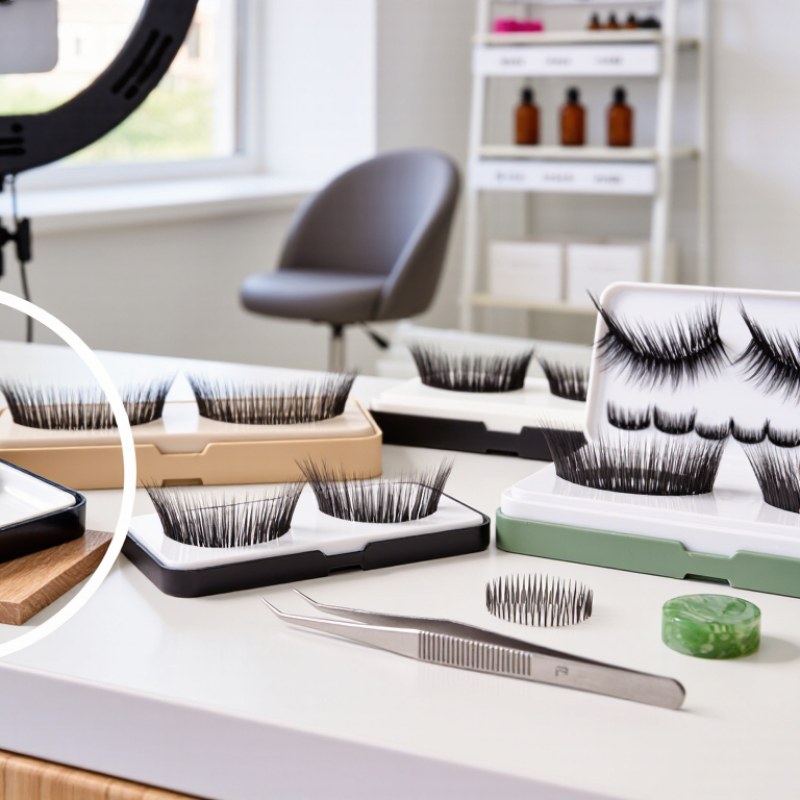
Choosing the right eyelash extension tray starts with understanding its type. Mixed-length trays offer several sizes in one strip. They work well for creating gradual, customized sets. Single-length trays are more efficient for repeated styling patterns. Premade fan trays can reduce preparation time, but their bases may not suit every client.
Material changes the final appearance and handling. PBT fibers are widely used because they hold curls well and resist moisture. Faux silk fibers usually provide a darker, softer shine. Matte fibers create a more natural finish under bright light. Terms like “silk” may describe appearance, not the actual fiber source. Check the product specifications carefully.
Curl shape, diameter, and length should match the client’s natural lashes. A heavy diameter can strain fine lashes. A dramatic curl may also lift unevenly on straight natural lashes. Inspect each strip for consistent thickness and clean tips. The backing should release fibers without bending them. Clear labeling saves time during appointments. Small details matter.
In practice, I once selected a tray by curl alone. The curl looked beautiful, but the diameter was too strong for several clients. That choice made isolation slower and styling less balanced. Now, I compare material, weight, flexibility, and curl together. No tray suits every eye shape. A short test section can reveal problems before a full set begins.
Matching Curl, Length, and Thickness to Each Client
Choosing the best eyelash extension tray starts with the client, not the curl chart. In my consultations, I examine natural lash direction, strength, density, and eye shape. A lifted curl can open downturned eyes, while a softer curl often suits straight or hooded eyelids. Too much lift may press against the lid and feel uncomfortable. Small details matter.
Length should follow the natural lash, not personal preference alone. I usually select extensions only slightly longer than the client’s strongest lashes. Fine lashes need lighter, shorter fibers to prevent stress. For a sparse lash line, moderate lengths can create a cleaner result than dramatic volume. Measure carefully. The longest fibers should not become heavy or difficult to maintain.
Thickness must match both lash strength and the chosen technique. A classic set may need a medium diameter, while volume fans require finer fibers. I check isolation throughout the appointment, because one extension attached to several natural lashes can cause pulling. This is where experience helps, though mistakes still happen. I once chose a curl that looked elegant in the tray but felt too intense on a client’s deep-set eyes. Her feedback changed my selection process. I now compare the tray beside the client’s profile and reassess under natural light. Comfort, balance, and healthy lash growth remain more reliable measures than a dramatic photograph.
Evaluating Lash Quality, Safety, and Application Performance
Choosing an eyelash extension tray starts with the lash itself, not its packaging. During practice sessions, I inspect each fiber under a bright lamp. Consistent thickness, smooth tips, and clean alignment matter. A lash should lift easily from the strip without bending or leaving sticky residue. Uneven curls create uneven fans and slow down placement. Look for clear labeling of length, diameter, curl, and material. If details are vague, reliability becomes guesswork. It is a small warning.
Safety deserves equal attention. Professional use requires clean storage, intact strips, and a suitable adhesive system. Check the adhesive manufacturer’s instructions for humidity, curing time, and compatibility. Never assume a darker or softer fiber is automatically safer. Avoid products with a strong chemical odor, damaged packaging, or missing batch information. A trained technician should also review client allergies, sensitivities, and eye conditions before application. Patch testing may help, but it cannot predict every reaction. That limitation is easy to forget.
Application performance becomes clear during a full set, not a quick glance. Test several lengths and curls on a practice strip or mannequin. Observe pickup, fan formation, bonding speed, and retention during controlled work. The best tray supports steady isolation without excessive weight on natural lashes. Very fine fibers can look elegant, yet they may collapse under poor technique. I have learned to question “easy to use” claims. Record what works in your room’s actual humidity, then compare results over time. Small notes often reveal more than attractive photos.
How to Choose the Best Eyelash Extension Tray?
Typical extension diameters by application style
Extension diameter should be selected according to the client’s natural lash strength, the desired look, and the application technique. Classic sets commonly use thicker fibers, while volume and mega-volume sets use lighter fibers to reduce excess weight. These values are professional reference points rather than universal limits; lash condition, curl, length, and adhesive performance must also be assessed.
Choosing the Right Tray Design for Different Lash Styles
Choosing an eyelash extension tray starts with the lash style you actually create. For classic sets, choose organized strips with consistent lengths, such as 8–13 mm, and moderate diameters around 0.12–0.15 mm. A clear curl pattern reduces pickup time and helps maintain balanced mapping. For hybrid sets, combine classic trays with lightweight volume fibers. Mixed-length trays are useful for soft transitions around the inner and outer corners.
Volume and wispy styles need more flexibility. Look for narrow strips, easy-to-separate fibers, and curls that hold their shape during fanning. Lightweight diameters, often 0.03–0.07 mm, support handmade fans without placing unnecessary weight on natural lashes. For doll-eye or anime-inspired designs, longer center lengths create visual lift, but only when the client’s natural lashes can safely support them. Lash health comes first. Always.
Allied Market Research valued the global false-eyelashes market at about 1.6 billion dollars in 2022 and projected 3.4 billion dollars by 2032. This category is broader than salon extensions, so the figures should not be treated as exact extension demand. Still, customization clearly influences purchasing decisions. In my experience, large mixed trays look economical but can create clutter and wasted fibers. I sometimes buy too many lengths. That mistake is worth reviewing. Choose tray layouts based on your regular maps, client textures, and working speed, not appearance alone.
Comparing Brand Reliability, Packaging, and Overall Value
How to Choose the Best Eyelash Extension Tray?
A reliable eyelash extension tray should perform consistently from the first strip to the last. In my salon experience, uneven curls often reveal weak quality control. I check whether each fiber has the same length, thickness, and curve. The tray should show clear product specifications, batch details, and production dates. These details support traceability when a client reports unexpected retention or discomfort.
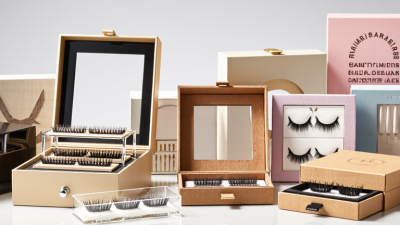
Packaging affects daily efficiency more than many artists expect. A firm tray protects delicate fibers during shipping and storage. Transparent labeling helps me identify lengths quickly without opening every section. Secure adhesive strips prevent loose lashes from shifting. Clean, readable packaging also suggests disciplined manufacturing practices. Still, attractive packaging can mislead. I once chose a beautifully presented tray that had inconsistent curls. That mistake cost appointment time.
Overall value depends on usable lashes, not the lowest price. I compare the number of practical strips, fiber consistency, and waste after several appointments. A slightly higher-priced tray may save money if its lashes separate easily and maintain their shape. I also review storage guidance and material information before testing a new product. Keep records. Note pickup speed, fan stability, and client comfort. My evaluation is not perfect, because humidity and technique influence results. Rechecking the same tray under different room conditions gives more reliable evidence. A trustworthy supplier should answer technical questions clearly and replace damaged products through a documented process.
How to Choose the Best Eyelash Extension Tray? — Comparing Brand Reliability, Packaging, and Overall Value
| Evaluation Dimension |
Tray A
Professional Standard |
Tray B
Value Focused |
Tray C
Premium Packaging |
Tray D
High-Volume Use |
Tray E
Flexible Mixed Lengths |
| Fiber Composition |
Lightweight synthetic fiber |
Standard synthetic fiber |
Lightweight synthetic fiber |
Standard synthetic fiber |
Lightweight synthetic fiber |
| Curl Consistency |
High; uniform across strips |
Moderate; minor variation possible |
High; heat-set curl |
Moderate to high |
High; consistent mixed curls |
| Available Lengths |
8–15 mm |
8–14 mm |
8–15 mm |
8–16 mm |
7–15 mm |
| Available Curls |
J, B, C, CC, D |
B, C, D |
C, CC, D, L |
J, B, C, D |
B, C, CC, D, L |
| Thickness Options |
0.03–0.20 mm |
0.05–0.20 mm |
0.03–0.18 mm |
0.05–0.20 mm |
0.03–0.15 mm |
| Strips per Tray |
16 |
20 |
16 |
20 |
16 |
| Strip Adhesion |
Balanced; easy pickup and removal |
Variable; may require adjustment |
Controlled; low residue |
Strong; suitable for frequent use |
Balanced; clean release |
| Tray Labeling |
Length, curl, thickness, lot code |
Length, curl, thickness |
Length, curl, thickness, lot code, date |
Length, curl, thickness, lot code |
Length, curl, thickness, lot code |
| Lot or Batch Traceability |
Available |
Not consistently available |
Available |
Available |
Available |
| Packaging Protection |
Rigid case with clear lid |
Lightweight plastic case |
Rigid case with inner protective film |
Stackable rigid case |
Compact rigid case with dividers |
| Moisture and Dust Protection |
Good; snap-close case |
Basic; standard closure |
Very good; sealed inner film |
Good; reinforced closure |
Good; divided interior |
| Typical Retail Price per Tray |
US$12–18 |
US$7–11 |
US$16–24 |
US$10–15 |
US$14–21 |
| Estimated Usable Yield |
Approximately 85–92% |
Approximately 75–85% |
Approximately 88–94% |
Approximately 82–90% |
Approximately 86–92% |
| Estimated Cost per Usable Strip |
US$0.75–1.13 |
US$0.44–0.73 |
US$1.06–1.50 |
US$0.50–0.91 |
US$0.88–1.31 |
| Reliability Score |
4.5 / 5 |
3.4 / 5 |
4.7 / 5 |
4.1 / 5 |
4.4 / 5 |
| Packaging Score |
4.2 / 5 |
3.2 / 5 |
4.8 / 5 |
4.3 / 5 |
4.4 / 5 |
| Overall Value Score |
4.3 / 5 |
4.0 / 5 |
4.1 / 5 |
4.4 / 5 |
4.2 / 5 |
| Best Suited For |
Daily professional services |
Entry-level practice and budget control |
Premium studios and presentation-focused services |
Busy salons with high product turnover |
Technicians needing broad styling flexibility |
Scores use a five-point comparison based on curl consistency, labeling, traceability, packaging protection, usable yield, and cost per usable strip. Actual prices and performance may vary by supplier, order quantity, storage conditions, and production batch.