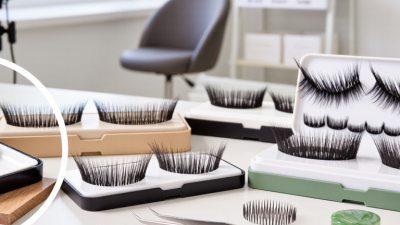
Flat Eyelash Extension products are changing how salons balance volume, comfort, and application speed. Unlike traditional round lashes, their elliptical base can create a darker lash line with less visible weight. That difference matters when artists work with fragile natural lashes.
Market data supports this growing interest. Grand View Research reported continued expansion in the global false-eyelashes market, driven by professional beauty services and premium customization. Allied Market Research also identified Asia-Pacific as a major cosmetics manufacturing and consumption region. However, these reports often group several lash categories together. Their figures should not be treated as exact Flat Eyelash Extension sales.
China remains an important sourcing destination, but supplier quality varies sharply. A glossy product page proves little. Buyers should examine fiber consistency, tray labeling, curl retention, adhesive compatibility, sterilized packaging, and batch records. One uneven tray can slow an entire appointment. Lash educator Jo Mousselli has repeatedly emphasized, “The health of the natural lash must come first.” That principle should guide every supplier comparison.
This guide reviews China’s top 10 Flat Eyelash Extension suppliers through a practical purchasing lens. It considers manufacturing experience, private-label capability, product testing, communication, and after-sales reliability. Rankings are never permanent. A supplier with excellent samples may still struggle with larger orders. Readers should request current certificates, test samples, and written specifications before committing. The best choice is not always the cheapest factory. Sometimes, it is the supplier that answers difficult questions clearly.
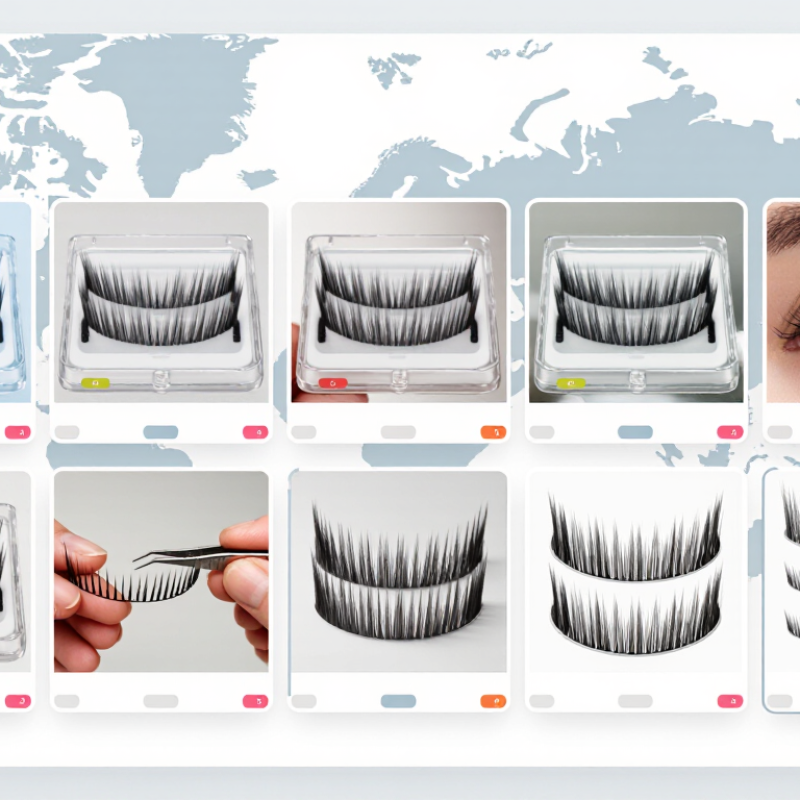
Flat eyelash extensions have an oval, ribbon-like base rather than a fully round profile. Their wider surface can create stronger visual density with less fiber weight. Many flat fibers are hollow or partly flattened, helping them appear bold without feeling excessively heavy. They are commonly used for classic sets, hybrid looks, and clients wanting darker lash lines.
Application still requires precision. A trained technician isolates one natural lash, selects a suitable diameter and curl, then places the extension close to the base without touching the skin. The flatter underside can improve directional stability, but poor placement may cause twisting or uncomfortable contact. I have found that matching length matters more than chasing maximum fullness. Longer fibers can stress weak natural lashes.
Industry demand supports continued interest in this category. Grand View Research estimated the global false eyelashes market at about USD 1.6 billion in 2022, with projected growth through 2030. Research and Markets has also identified professional lash services and lightweight materials as important growth areas. These reports cover broader false-lash products, not flat extensions alone, so their figures should not be overstated.
Supplier evaluation should include fiber consistency, adhesive compatibility, curl retention, and tray labeling. Ask for technical specifications and sample trays. A glossy catalog is not enough. Some “lightweight” claims remain difficult to verify without measuring actual fiber weight and diameter. Technicians should also review allergy information, sanitation procedures, and local safety requirements before regular use.
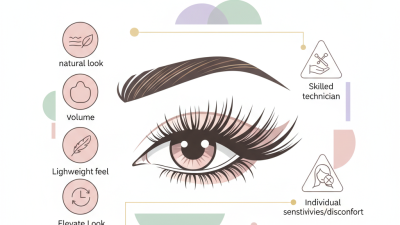
Defining China’s top flat eyelash extension suppliers requires more than checking export volume or polished catalogs.
Grand View Research estimated the global false eyelashes market at about USD 1.6 billion in 2022, with continued growth expected through 2030. This growth increases supplier choices, but it also makes comparison harder. A serious assessment should separate factories from trading companies. Public rankings often mix both categories.
Product consistency should carry the greatest weight.
Request samples from three production batches. Measure lash thickness, base width, curl retention, and length accuracy. Flat lashes should feel lightweight while maintaining a stable attachment surface. Ask for material specifications, production records, and batch traceability. ISO 22716-based cosmetic manufacturing practices can provide useful evidence of process control, even though they do not replace a factory audit.
Reliability also depends on delivery performance, defect handling, and communication.
Review at least six months of order records when possible. Check whether the supplier can maintain the same curl after heat, humidity, and transport testing. Intertek and SGS quality reports may support verification, but independent sampling remains essential.
A supplier may offer excellent samples yet struggle with larger orders.
That risk is easy to overlook. Score each candidate across quality, capacity, documentation, lead time, customization, and after-sales response. The strongest supplier is not always the cheapest or largest. It is the one that produces repeatable results under real salon conditions.
China’s top 10 flat eyelash extension suppliers are often judged by more than price. Reliable sourcing begins with material consistency, clear product data, and practical sample testing. Flat lashes usually have a wider base and a lighter feel than classic round extensions. Their shape should remain stable after removal from the tray.
During supplier evaluations, I check curl accuracy, diameter tolerance, color uniformity, and strip arrangement. A good supplier can provide samples with precise lengths, curls, and finishes. Batch records also matter. They help buyers trace changes in fiber quality or packaging. Ask for production photos, inspection procedures, and realistic lead times. Polished catalogs are not enough.
Small details reveal manufacturing discipline. The lash strips should lift cleanly without excessive residue. Fibers should not bend unevenly inside a mixed-length tray. Packaging must protect the trays from dust, moisture, and crushing during transport. I also compare sample results with the supplier’s stated specifications. Sometimes the first sample looks excellent, but later batches feel slightly heavier. That needs discussion, not assumption. Suppliers offering private labeling may support custom trays, printed boxes, and barcode preparation, subject to local requirements. Their communication speed is useful, but technical answers matter more. A lower quote can become expensive when rework, delays, or inconsistent stock appear. My ranking would remain provisional until repeat orders confirm performance.
Chinese flat eyelash extension suppliers often compete through material consistency, flexible production, and export experience. During supplier evaluations, buyers should inspect curl memory, fiber softness, thickness accuracy, and adhesive compatibility. A well-made flat lash should keep its shape after opening, without crushed corners or uneven coloring. Small defects matter.
Quality varies between factories. Some suppliers use strict batch inspections and provide clear product specifications. Others rely heavily on visual checks, which may miss slight length or curl differences. Request samples from several of the top ten suppliers, then compare them under the same lighting. Check the tray labels, lash alignment, and removal resistance. This practical test reveals more than a polished catalog.
Customization is another clear advantage. Suppliers may adjust length mixes, curl patterns, thickness, tray design, labeling, and packaging materials. However, custom orders can increase minimum quantities and lead times. Pricing is usually competitive, but the cheapest quotation may exclude packaging, sample fees, inspection, or shipping. Ask for a complete landed-cost breakdown. I have seen buyers focus too much on unit price and later regret the decision. A reliable supplier should answer technical questions directly, share production details, and accept reasonable quality standards. Still, no supplier is perfect; communication gaps and occasional batch variation deserve ongoing review.
Choosing among China’s top 10 flat eyelash extension suppliers requires more than comparing prices. Grand View Research reported that the global false eyelashes market reached approximately USD 1.6 billion in 2022, with projected growth of 6.2% annually from 2023 to 2030. However, flat lash extensions remain a narrower category, so supplier claims should be tested against physical samples, not market slogans.
Request samples with identical lengths, curls, thicknesses, and tray quantities. Check whether the flat base stays stable after repeated handling. A reliable factory should provide material specifications, batch records, inspection procedures, and consistent packaging. Ask for production photos, lead-time records, and third-party quality documents where relevant. ISO 9001 certification can indicate a controlled system, but it does not guarantee excellent lash performance. Samples reveal more.
Evaluate communication as carefully as the product. A professional supplier should explain fiber composition, weight, adhesive compatibility, and customization limits clearly. Compare at least three quotations using the same specifications. Very low prices may reflect thinner fibers, weaker trays, or unstable sizing. Do not rush. The honest answer may be less impressive. I would also test several batches before placing a large order, because one successful sample cannot prove long-term consistency. Records of corrective actions, worker training, and traceability add practical confidence when selecting a Chinese flat lash extension supplier.
A practical 100-point procurement scorecard for evaluating anonymous Chinese flat lash extension suppliers.
Product consistency, material transparency, customization, quality control, certifications, lead time, minimum order quantity, packaging, communication, and after-sales support are key purchasing dimensions. Compare suppliers using the same criteria and verify samples, test reports, production capacity, and shipping terms before placing a bulk order.