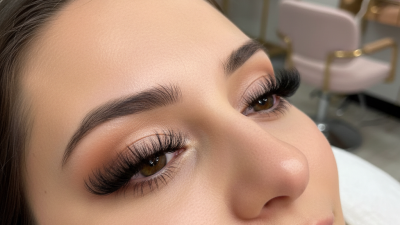
Choosing the best Semi Permanent Lashes supplier in China requires more than comparing catalog prices. Salon owners need consistent curls, stable diameters, clean packaging, and reliable delivery. One uneven tray can waste appointment time and damage client trust.
Industry demand supports careful sourcing. Grand View Research reported continued growth in the global false eyelashes market, driven by professional beauty services and rising cosmetic spending. The Business Research Company also identifies eyelash extensions as a growing professional beauty segment. These reports cover broader categories, not every Semi Permanent Lashes product. That distinction matters.
Ruthie Belle, founder of London Lash, has said, “Good lashes should enhance, not change, the face.” Her principle also applies to supplier selection. The right factory should provide clear material specifications, batch records, sample testing, and practical after-sales support. Ask about fiber quality, lash-band consistency, adhesive compatibility, and storage conditions. Request recent production samples, not only polished showroom photographs.
Factory experience matters. So does communication.
A dependable Chinese supplier should explain lead times honestly and identify possible defects before shipment. Certifications can support credibility, but they do not replace independent inspection or hands-on testing. Buyers should also review export history, packaging protection, and response speed during a small trial order.
There is no perfect supplier. I may even value a slightly slower partner who reports problems openly. In this market, transparency often protects a salon better than the lowest quotation.
Semi-permanent lashes are individual extensions attached to natural eyelashes with professional adhesive. They are not permanent implants.
Most sets remain attractive for three to six weeks, depending on natural lash growth, cleansing habits, and application quality. As natural lashes shed, attached extensions fall away with them.
A technician usually creates a lash map before applying each extension. This map controls length, curl, density, and eye-area balance. For example, shorter fibers near the inner corner can create a softer, more comfortable finish.
The process requires clean tools, suitable adhesive, and careful isolation of every natural lash. A trained technician should examine lash strength and discuss allergies before treatment. A small patch test may reduce risk, although it cannot predict every reaction.
Clients should avoid rubbing, oil-heavy products, and excessive steam during early bonding. Gentle cleansing still matters; dirty lashes can collect makeup and bacteria.
Buyers comparing a Chinese supplier should request adhesive information, fiber specifications, batch records, and clear usage instructions. Reliable suppliers should explain storage conditions and provide consistent samples.
In practice, results are not always perfectly symmetrical. Eye shape, sleeping position, and natural lash direction can change the final look. That imperfection deserves honest discussion, not exaggerated promises.
A reliable Chinese semi-permanent lashes supplier is defined by more than low pricing. Practical sourcing experience shows that consistency matters most. Ask how the factory controls curl, length, thickness, and adhesive compatibility. Request samples from different production batches, not one carefully selected package. Small differences can affect application time and client comfort.
Material transparency is equally important. A professional supplier should provide clear specifications, production records, and relevant safety documentation. Check whether synthetic fibers are uniform, lightweight, and free from strong chemical odors. The supplier should explain storage conditions and recommended use. Vague answers deserve caution. They usually create problems later.
Quality control should be visible, not merely promised. Reliable factories inspect trays, packaging, labeling, and order quantities before shipment. They should also communicate delays honestly and respond with technical details. I once focused too heavily on sample appearance and overlooked batch stability. That was a costly lesson. A supplier may offer excellent samples yet struggle with repeat orders. Review production capacity, inspection procedures, and replacement policies before committing. Clear communication helps, but written records protect both sides. No supplier is perfect. What matters is how openly problems are identified and corrected.
Reliable suppliers are typically evaluated by product safety, manufacturing consistency, quality control, delivery performance, customization capability, and transparent communication. The chart shows a practical procurement evaluation model; it does not represent any specific company or brand.
How to use this model: Request evidence for each factor, such as material and adhesive safety documentation, batch inspection records, production samples, agreed lead times, and clear quality standards before placing an order.
Choosing the best semi-permanent lashes supplier in China requires more than comparing catalog photos. Grand View Research estimates the global false eyelashes market reached about USD 1.6 billion in 2023, with continued growth expected through 2030. This expansion increases supplier choice, but also increases quality differences. Ask for recent batch records, not only polished samples. Check curl consistency, lash thickness, base-strip alignment, shedding, and weight. A lash that looks soft may still feel heavy after several hours.
Materials need careful verification. Many professional products use PBT synthetic fiber because it offers stable curl and predictable thickness. Request material declarations, product specifications, and safety documentation for adhesives and accessories. ISO 22716 is a useful reference for cosmetic good manufacturing practices, although certification alone cannot prove every batch is perfect. Compare diameter, taper, gloss, flexibility, and heat resistance under the same testing conditions. Keep retained samples from each shipment.
Customization should be measured, not promised. A capable supplier can adjust length, curl, diameter, tray layout, packaging, and private-label details. Ask for a physical pre-production sample before approving volume production. Confirm tolerances in writing, such as ±0.02 mm diameter or agreed length ranges. Custom trays can look impressive. Poor calibration can still create uneven fans. The supplier should explain corrective actions, inspection frequency, and replacement terms. My own comparison would include a small pilot order, because online communication often hides production limitations. Price alone is a weak signal.
When choosing the best semi permanent lashes supplier in China, examine safety evidence before comparing prices or packaging. Ask for current certificates, not screenshots from old product files. ISO 9001 can indicate controlled quality processes, while ISO 22716 may support cosmetic manufacturing practices. These certificates should match the factory’s legal company name and production address.
For lash extensions, request material specifications, batch numbers, and test reports from independent laboratories. For adhesives, check the ingredient list, Safety Data Sheet, shelf-life testing, and storage instructions. Eye-area products need careful irritation and sensitization assessments. Confirm that reports identify the exact product and batch. A certificate logo alone proves little. I have seen attractive documentation that lacked traceability. That is a warning, although one missing file does not always mean poor manufacturing.
Tips: Visit the factory or arrange a live video audit. Watch how workers handle tweezers, trays, and adhesive bottles. Ask about sealed packaging, contamination controls, complaint records, and product recalls. Request samples from different batches and test retention, odor, drying time, and comfort under professional supervision. Check whether the supplier follows your destination market’s requirements, because standards differ by country. Keep written records of every approval. Good suppliers answer specific questions clearly, even when the answer is inconvenient.
| Checkpoint | Relevant Standard or Requirement | Documents and Evidence to Request | What the Evidence Should Confirm | Priority |
|---|---|---|---|---|
| Cosmetic manufacturing controls | ISO 22716:2007 — Cosmetics: Good Manufacturing Practices (GMP) | Valid certificate, certification scope, manufacturing-site address, audit date, and certification-body details | The site operates documented controls for personnel hygiene, premises, equipment, production, storage, quality control, complaints, and recalls. Verify that the certificate covers the actual lash or adhesive manufacturing site. | Recommended |
| Quality management system | ISO 9001:2015 Quality Management Systems | Certificate, scope of certification, site address, issue and expiry dates, and latest surveillance-audit status | The supplier has a controlled system for specifications, purchasing, production, inspection, nonconformity handling, corrective actions, and continual improvement. ISO 9001 does not by itself prove that a product is safe. | Recommended |
| Adhesive ingredient safety | Applicable cosmetic and chemical-safety rules in the destination market; controlled ingredient specifications | Full ingredient list, technical data sheet, Safety Data Sheet (SDS), batch specifications, allergen or sensitizer information, and raw-material declarations | The adhesive composition is traceable and can be reviewed for cyanoacrylate type, formaldehyde-releasing substances, colorants, solvents, and other restricted or hazardous ingredients. “Hypoallergenic” should not be accepted without supporting evidence. | Required |
| Safety Data Sheet quality | GHS-aligned SDS and the chemical-labeling rules of the destination market | Current 16-section SDS, product identifier, hazard classification, composition information, first-aid measures, handling and storage instructions, exposure controls, transport data, and revision date | The adhesive’s hazards, emergency procedures, storage conditions, and personal-protection requirements are clearly documented. The SDS should match the exact product supplied. | Required |
| Restricted substances for the European market | REACH Regulation (EC) No 1907/2006 and applicable restrictions under Annex XVII | REACH compliance declaration, substance information, test reports where relevant, and confirmation of any SVHC obligations | Materials and adhesive ingredients meet applicable European chemical restrictions. REACH is a regulatory framework, not a single universal product certificate; the declaration must relate to the actual formulation and components. | Conditional |
| European cosmetic compliance | Regulation (EC) No 1223/2009 when the product is legally classified as a cosmetic in the European Economic Area | Responsible-person information, Product Information File (PIF) availability, Cosmetic Product Safety Report (CPSR), ingredient list, labeling artwork, and evidence of notification where applicable | The product has been assessed and labeled according to the destination market. A supplier certificate alone does not replace the legal obligations of the responsible person placing a cosmetic product on the market. | Conditional |
| United States market documentation | Applicable requirements under the Modernization of Cosmetics Regulation Act (MoCRA) when the product falls within the U.S. cosmetic category | Facility-registration and product-listing information where applicable, safety substantiation records, adverse-event procedure, U.S. labeling review, and responsible-person details | The importer or responsible person has addressed applicable U.S. obligations. U.S. cosmetic facility registration or product listing is not the same as FDA approval or an FDA safety certification. | Conditional |
| Microbiological quality | Risk-based cosmetic microbiological testing; commonly referenced methods include ISO 17516 for microbiological limits | Recent laboratory reports for finished products, sampling plan, total aerobic microbial count, specified microorganisms, and preservative or challenge-test data when relevant | Products meet suitable microbiological specifications for their formulation and intended use. Dry false-eyelash fibers may have a different risk profile from liquid adhesives, so testing should be product-specific. | Required |
| Heavy metals and chemical contaminants | Destination-market limits and applicable cosmetic or material-safety requirements | Independent laboratory reports for lead, mercury, arsenic, cadmium, and other relevant contaminants; test method, detection limit, sample identification, and test date | Pigments, fibers, packaging, and adhesive components have been evaluated for contaminants relevant to the product and market. Reports should identify the tested batch or representative material. | Recommended |
| Physical and performance testing | Supplier-approved product specifications and validated internal test methods | Test records for lash length, thickness, curl, weight, bonding time, viscosity, curing behavior, retention, flexibility, odor, and packaging integrity | Each batch conforms to agreed specifications and performs consistently during professional application. Acceptance limits should be written into the purchase specification before production. | Required |
| Biocompatibility and irritation evidence | Risk-based skin and eye-area safety assessment; applicable methods may include ISO 10993 only when relevant to the intended product classification and exposure | Toxicological assessment, irritation or sensitization reports, ophthalmic-safety rationale, and laboratory accreditation details | Testing matches the intended use near the eyes and is performed on the finished product or a justified representative formulation. A general “skin test” does not automatically prove eye-area safety. | Recommended |
| Independent laboratory credibility | ISO/IEC 17025 competence of the testing laboratory | Laboratory accreditation certificate, accredited scope, report number, sample details, test method, results, and authorization or signature | The laboratory is competent for the specific test method and analyte. Check that the report is not merely a supplier-generated certificate without traceable laboratory evidence. | Required |
| Batch traceability | Documented lot-control and recall procedures consistent with GMP principles | Batch-number system, raw-material records, production records, retention-sample policy, Certificate of Analysis (CoA), complaint log, and recall procedure | The supplier can trace a finished product back to raw materials and production records, isolate affected lots, investigate complaints, and provide corrective-action records. | Required |
| Packaging and shelf-life control | Product-specific stability and packaging-compatibility program | Stability-study summary, expiry or recommended-use period, storage conditions, packaging compatibility results, seal-integrity checks, and transport simulation where relevant | The adhesive remains within specification through its stated shelf life when stored as labeled. Packaging should protect against moisture, heat, light, and accidental leakage where applicable. | Required |
| Label and claim control | Destination-market labeling laws and substantiation requirements | Final label artwork, ingredient declaration, net quantity, lot code, expiry or period-after-opening information where required, warnings, directions, manufacturer or responsible-person details, and claim-support documents | Labels accurately describe the product and include appropriate warnings such as avoiding direct eye contact, following professional-use instructions, and observing storage requirements. Claims such as “non-toxic” or “medical grade” require reliable substantiation. | Required |
| Supplier audit and verification | On-site or remote quality audit against agreed specifications and applicable GMP controls | Audit checklist, corrective-action report, production-line photographs or video verification, calibration records, pest-control records, training records, and change-control procedure | Certificates are supported by actual operating practices. The audited address, production capability, subcontractors, and quality-control resources match the information provided during supplier qualification. | Required |
| Certificate authenticity | Verification through the issuing certification or accreditation body | Certificate number, QR code or online verification record, issuing-body accreditation status, exact legal entity, certified site, scope, issue date, expiry date, and suspension status | The certificate is current, genuine, and relevant to the product and manufacturing site. A logo displayed on a website is not sufficient proof of certification. | Required |

Practical selection rule: The best supplier is not necessarily the one with the largest number of certificates. Prioritize verified site-specific documentation, safe adhesive formulation, independent test reports, batch traceability, destination-market compliance, and a documented process for complaints, recalls, and corrective actions. Certification requirements depend on the product classification and the country where the lashes or adhesive will be sold.
Price should never stand alone when choosing a semi-permanent lashes supplier. Grand View Research valued the global false eyelashes market at about USD 1.6 billion in 2023. It also forecasts a 6.4% annual growth rate through 2030. This growth attracts many factories, but quality can vary sharply.
A low unit price may hide thin fibers, weak curl retention, or inconsistent trays. Ask for samples from three production batches. Compare lash thickness, curl shape, tray labels, and packaging strength. Then calculate the landed cost, including product price, inspection, freight, customs, and possible replacement losses.
Minimum orders matter too. A small salon may prefer 100 to 300 trays, even with a higher unit cost. A distributor may accept 1,000 trays for better pricing.
I once considered a cheaper quotation too quickly. The shipping surcharge later changed the decision.
Tips:
Request a written MOQ ladder. Confirm whether mixed curls and lengths count toward the MOQ. Ask for production lead time, carton dimensions, and shipping terms. Choose air freight for urgent samples, but compare sea freight for repeat orders. Baymard Institute’s 2024 checkout research reports an average cart abandonment rate above 70%. Delivery uncertainty is one practical reason customers hesitate. Your buyers may react similarly when restocking feels unpredictable. A clear shipping schedule, tracking process, and backup plan can be worth more than a small discount. Always test before committing. Supplier promises are useful, but physical evidence is better.